Dr. Tom Teter, Jr., DC | The Performance Practitioner
NEW CLINICAL RESOURCE
Dr. Tom Teter, Jr., DC | The Performance Practitioner
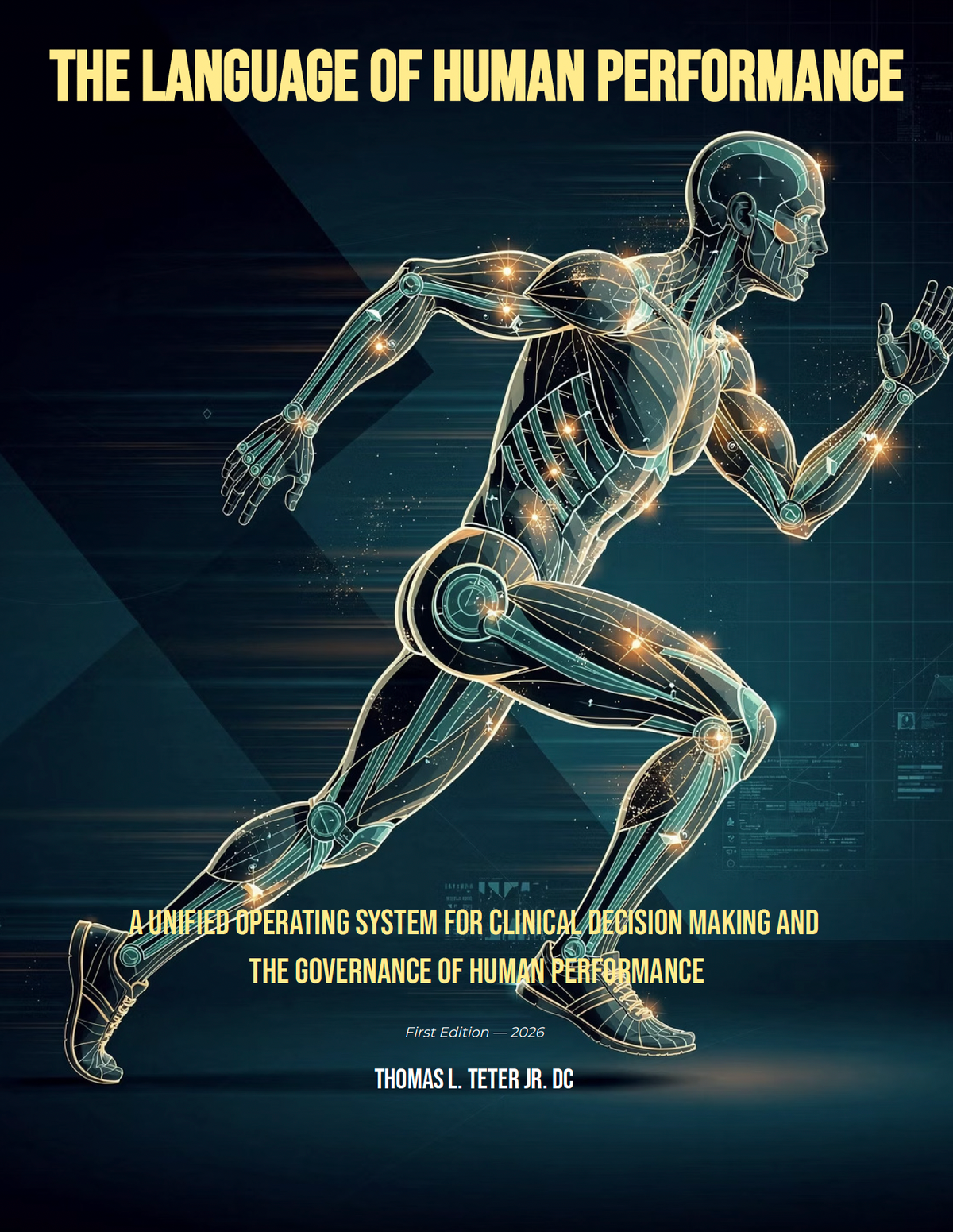
The Language of Human Performance is a structured clinical operating system that tells you what to do next — not based on instinct, but based on what the organism's biology actually requires at each stage of care.
Written for DC, PT, ATC & CSCS
75+ pages + 8 clinical assets
Instant digital delivery
SOUND FAMILIAR?
Most clinicians reading this have done the work. The courses. The certifications. The continuing education. But a specific frustration keeps surfacing — and it is not fixed by adding another tool to the toolbox.
A patient progresses through early care, symptoms resolve — and then stops. Progress stalls before full capacity is restored. You adjust the intervention, but the rationale for what you chose is harder to articulate than it should be.
Complex presentations respond to one intervention, then stop responding. The next clinical decision is made by feel rather than by a governing framework. It works — sometimes. But the outcomes are not as consistent as they should be.
An athlete clears your discharge criteria. Three weeks later they are back with the same presentation. Technically, you did everything right. Structurally, something was missing between your clinical decision and their biological readiness.
You know how to treat. You know how to train. But the decision architecture that tells you what must happen next — in what sequence, under what criteria, governed by what principle — has never been made fully explicit.
THE REAL PROBLEM
The education system for clinicians is extraordinarily good at building technical skill. It is almost entirely silent on what governs how that skill is deployed — the decision architecture that determines the sequence, dosage, and progression of every intervention relative to what the organism's biology actually requires.
Inconsistency is not a talent deficit. It is a structural deficit. The practitioner who produces inconsistent outcomes despite significant competence is not missing more tools — they are missing the framework that governs the tools they already have.
When structure leads and tools follow, outcomes stabilize. When tools lead and structure is absent, inconsistency is inevitable — not because the clinician is inadequate, but because no framework is making the critical decisions explicit.
The Language of Human Performance was built specifically to resolve this. Not by adding to the toolbox. By providing the governing architecture the toolbox has been missing.
THE SOLUTION
The Language of Human Performance is not a protocol. It does not replace the clinical skills you have spent years developing. It is the governing structure those skills have been waiting for.
A biologically grounded decision architecture
A governing framework for intervention sequencing
A system for dosing, monitoring, and progressing load
A clinical language that unifies rehabilitation and performance
A structure that makes your existing skills more consistent
A new technique or manual therapy method
A branded protocol or exercise prescription system
A replacement for your existing clinical approach
An introductory resource for new practitioners
A certification shortcut or credential program
INSIDE THE GUIDE
Organized from first principles through full system integration, the guide builds the complete governing framework in a sequence designed for immediate clinical application.
Why inconsistent outcomes are structural. The Tool Illusion and the case for a unified operating system.
The biological principle that resolves the inconsistency problem. Load as the governing variable — and why it matters.
The Periodic Table of Performance Elements — four domains that organize every clinical variable into a coherent architecture.
How the framework operates in real clinical time — entry points, stage progression, and course correction.
COMPLETE PACKAGE
Every purchase includes the complete implementation toolkit — not just the guide. Everything needed to apply the framework in practice immediately.
The complete framework. 75+ pages of structured clinical content covering the full governing system from biological principles through operational application.
The visual architecture of the entire framework. All four domains — Audit, Intervention, Monitoring, and Recovery — organized by their theoretical relationship to load. A clinical reference designed to be kept accessible during practice.
The decision-making map that translates the Periodic Table into real-time clinical workflow. The order of operations governing entry point identification, stage progression, monitoring integration, and recovery regulation across both the rehabilitation and fitness paths.
The standardized assessment tool for the rehabilitation path. Patient profile, needs analysis, examination framework, treatment planning structure, and discharge criteria — organized into a single reproducible clinical document.
The standardized assessment tool for the fitness and performance path. Client profile, needs analysis, assessment framework, training plan structure, and program evaluation criteria — the performance-side counterpart to the CAP Sheet.
A complete visual reference mapping the six stages of care from Acute Management through Fundamental Capacity. Stage definitions, load characteristics, and progression markers across the full rehabilitation-to-performance spectrum.
Detailed stage-by-stage breakdowns of the intervention continuum — what each stage requires, what load parameters apply, and what exit criteria govern advancement to the next phase.
A structured reference for acute, subacute, and chronic monitoring variables. The clinical tool that operationalizes the prediction-confirmation-regulation framework within the monitoring domain.
A visual reference organizing the Recovery Elements from least to most impactful. The structured guide for building recovery protocols that expand adaptive capacity rather than simply managing fatigue.
IS THIS RIGHT FOR YOU?
This guide is not for practitioners who are new to clinical care. It is for the experienced clinician who has invested in their skills and is still experiencing outcomes that are not as consistent as they should be.
This resource is designed for you if:
You are a chiropractor, physical therapist, athletic trainer, or strength and conditioning specialist working across the rehabilitation-to-performance continuum
Your outcomes are technically competent but not consistently reproducible
You can identify what went wrong after the fact but lack a structure that prevents it in advance
You have accumulated strong tools and techniques, but the decision-making framework governing when and how to deploy them remains more implicit than explicit
You are ready to stop asking what new method to learn next and start asking what governs the methods you already have
This guide is not for you if you are looking for new technique prescriptions, introductory clinical content, or a replacement for your existing clinical approach. If you are satisfied with your current level of outcome consistency, this framework will not add value.
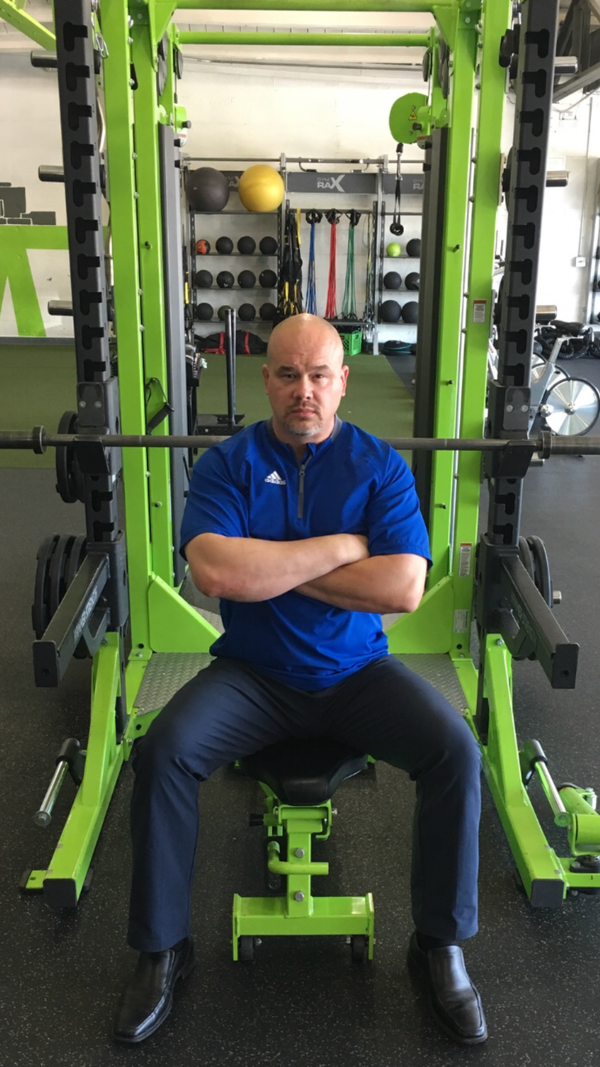
DC, CSCS
FOUNDER — REHAB TO FITNESS
I spent the early years of my clinical career doing what most practitioners do — accumulating. More certifications, more techniques, more assessment tools. My results improved, up to a point. But the inconsistency never fully resolved.
Patients who should have progressed did not. Athletes who were discharged returned with the same presentation six months later. The problem was not the tools. I had good tools. The problem was that nothing governed how those tools were sequenced, dosed, and progressed relative to what the organism's biology actually required at each stage of care.
Developing the Language of Human Performance was not an academic exercise. It was the direct response to more than twenty years of clinical practice and the recognition that inconsistency is a structural problem that requires a structural solution.
This guide is that solution — organized, documented, and built to be implemented in practice immediately. It is not everything I teach. But it is the foundation that makes everything else coherent.
GET INSTANT ACCESS
One purchase. Immediate delivery. The complete framework plus all eight clinical reference assets — everything needed to implement the governing system in practice today.
One-time purchase · No subscription · No recurring fees
The Language of Human Performance Guide (75+ pages, PDF)
Periodic Table of Performance Elements
The Operational Algorithm
Clinical Audit Process (CAP) Sheet
Fitness Audit Process (FAP) Sheet
The Rehabilitation Continuum
Individual Stages of Care Reference
The Monitoring Filter
The Recovery Pyramid
Instant digital delivery upon purchase. All assets delivered as PDF downloads. No physical shipping. No waiting period. Due to the nature of immediate digital delivery, all sales are final.
COMMON QUESTIONS
Is this a course or a guide?
It is a guide — a structured clinical reference document, not a video course or live program. It is designed to be read, referenced, and applied in practice.
What format is the guide delivered in?
The guide and all eight supplementary assets are delivered as PDF downloads immediately upon purchase. There is no physical shipping and no waiting period.
Is this relevant to my scope of practice?
Yes. The governing principle of the framework — load as the variable that organizes all clinical decisions — is universal across professional designations. Chiropractors, physical therapists, athletic trainers, and strength and conditioning specialists have all applied this framework within their respective scopes of practice. The framework does not prescribe specific techniques — it governs how the techniques within your scope are sequenced, dosed, and progressed.
Does this replace my existing clinical approach?
No. The Language of Human Performance does not reject any diagnosis, technique, or training methodology — it reorders them. Diagnosis informs constraint. Techniques deliver load. The framework governs how those inputs are organized, sequenced, and progressed. Your existing clinical skills remain intact. This framework gives them a governing structure that makes them more consistent and reproducible.
I already have a strong clinical foundation. Will this add value?
That is precisely the profile this guide was designed for. The Language of Human Performance is not an introductory resource. It is built for experienced practitioners who have a strong technical foundation and are experiencing the specific frustration that foundation alone cannot resolve — inconsistent outcomes despite genuine competence. If that describes your clinical experience, this framework addresses the structural deficit directly.
Is there a refund policy?
Due to the immediate digital delivery of all assets, all sales are final. If you have questions about whether this resource is appropriate for your practice before purchasing, contact us directly at team@tomteter.com.
The Language of Human Performance gives your clinical tools a governing framework — so that what happens next is determined by structure and biology, not instinct and habit.
That shift — from tool-driven to system-governed — is what consistent clinical outcomes are built on.
Instant digital delivery · Complete guide + 8 clinical reference assets · One-time purchase
Contact: Team@TomTeter.com
Copyright © 2026 Dr. Tom Teter | The Performance Practitioner. All rights reserved.
For licensed clinicians and performance practitioners only.